Operational education lives here on AscendOps. Active operator infrastructure runs through TranscendOps at TranscendOps →
HVAC Operational
Infrastructure
Seasonal surges, after hours calls, and quote follow up chaos create a hidden economics problem: every missed lead during peak season compounds into thousands in lost revenue within a single week. Infrastructure driven operations absorb the surge while protecting your margins and your team's capacity.
The Operational Reality
Most HVAC businesses lose 30% of their potential revenue through simple operational friction.
In the trades, speed is the primary currency of growth. When a homeowner has an emergency no heat call on a Friday night or an AC failure during a record summer heatwave, they aren't looking for the best marketing — they are looking for the first person to answer the phone and confirm a dispatch time.
Traditional HVAC operations rely on manual intake. If your dispatcher is on another call, or if the lead comes in after hours, that revenue is often lost to the competitor who responds faster. Seasonal operational overload crushes even the best teams, leading to delayed quotes, missed callbacks, and exhausted staff who simply cannot keep up with the surge.
The problem isn't your team; it is your infrastructure. Until your lead handling and qualification are separated from manual human labor, your growth will always be capped by your ability to manage chaos. Modern operators connect into systems that handle the surge so the business can scale without breaking.
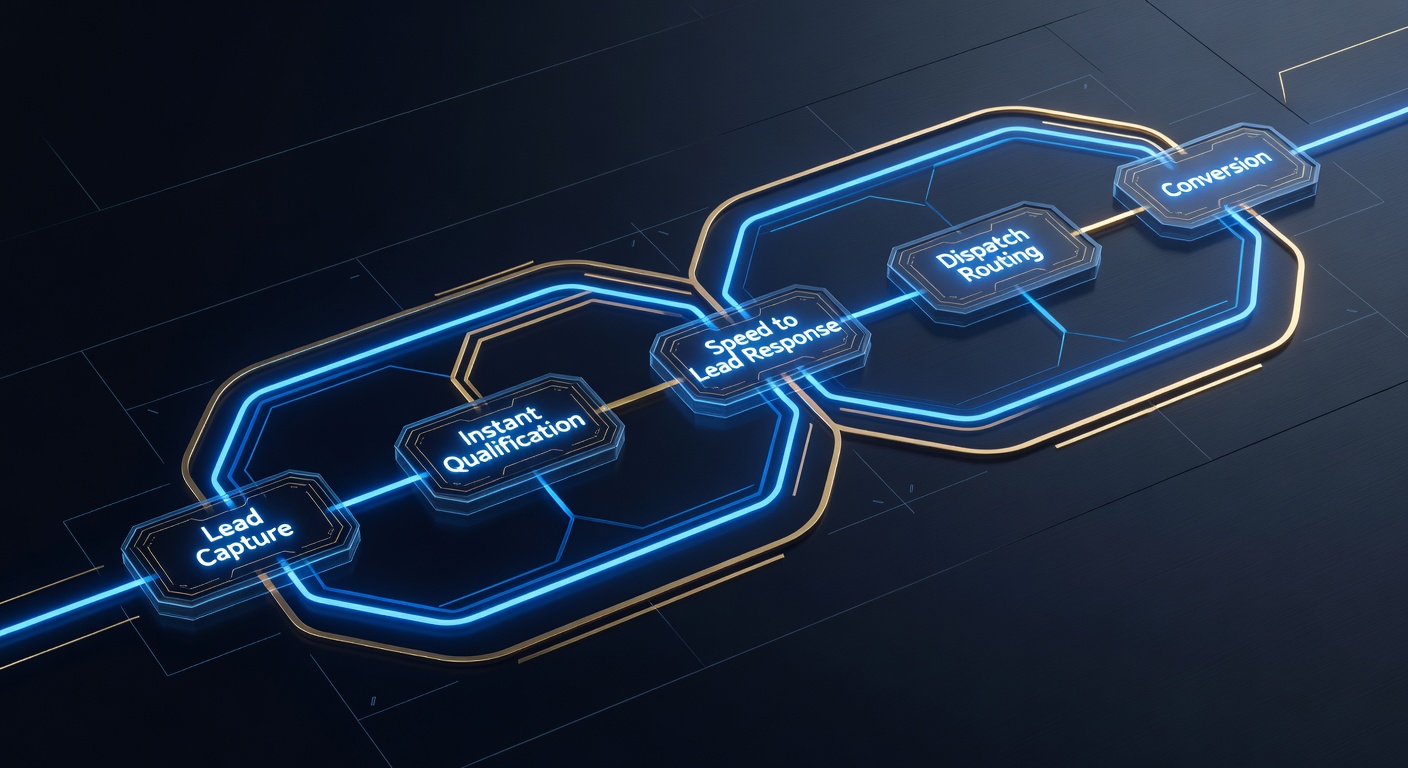
Infrastructure Driven Intake
What Infrastructure Changes
The shift from reactive management to proactive autonomous operations.
When you connect into infrastructure driven operations, the entire math of the business changes. Leads are qualified and routed the moment they arrive. Automated callback systems ensure that every inquiry is met with a systemic intake within seconds, regardless of the time or day.
This infrastructure handles the operational load that usually falls on your front desk or dispatch team. Quote request management is systematized, ensuring that every estimate is followed up on until a decision is made. This consistency turns seasonal spikes into predictable growth periods rather than operational nightmares.
The ecosystem provides the backend support required to maintain a high level of service without increasing your headcount. The operator gains access to scalable systems that flex with the market, allowing the business to capture every opportunity without the traditional staffing drag.
Key Operational Insights
Four ways infrastructure changes the trajectory of an HVAC business.
Speed To Lead Wins Emergency Calls
In the HVAC industry, the first contractor to respond is usually the one who secures the service opportunity — often within 60 seconds of the inquiry being placed. Infrastructure ensures that response happens instantly, turning emergency calls into booked service visits before your competitors even open the notification.
Seasonal Scaling Without Staffing Chaos
Peak summer and winter cycles often crush manual operations with a wave of calls that no team can handle. Connected infrastructure absorbs volume spikes without requiring you to hire seasonal staff, train them, and let them go when demand drops — preserving both your margins and your operational stability.
Every Missed Call Is Revenue Lost
A missed inbound lead during peak season is not just a lost repair job — it is a lost customer relationship that compounds into years of maintenance revenue. Autonomous response systems capture 24/7 opportunity and route it to the right technician without adding a single person to your payroll.
Consistent Follow Up Builds Maintenance Contracts
Revenue stability in HVAC comes from maintenance agreements, not one time emergency calls. Infrastructure handles the consistent follow up cadence required to turn a single service visit into an annual contract — systematically, without relying on a busy dispatcher's memory.
Old Model vs New Infrastructure
Comparing the limitations of manual HVAC management with the power of autonomous operations.
Manual Operations
Infrastructure Driven Operations
Speed To Lead Is The Winning Edge
Why immediacy is the most important metric in modern HVAC operations.

In HVAC, the first response wins the job. Infrastructure makes speed automatic.
In a world of instant gratification, the customer who is dealing with a broken AC or a flooded basement isn't going to wait three hours for a callback. They are going down the list on Google until someone answers and schedules a technician.
Infrastructure makes this immediacy possible without hiring more dispatchers. By connecting into autonomous systems, your business can respond to a web lead or a missed call within 30 seconds. This level of responsiveness doesn't just win the job; it builds immediate trust and positions your company as the high value professional in the market.
The Real Cost of Manual Operations
Operational bottlenecks are not just inconveniences — they are economics problems. Every delay, every missed lead, and every manual process has a measurable cost.
Missed Call Economics
During peak summer and winter weeks, the average HVAC company misses 30 to 40 percent of inbound calls. At an average ticket of $800 to $1,200 per service call, a single missed week can represent $15,000 to $25,000 in unrecoverable revenue.
Dispatch Overload
Manual dispatching creates a bottleneck where your most experienced person becomes a traffic controller instead of solving problems. Infrastructure routes qualified leads automatically, freeing your dispatcher to handle exceptions rather than every inbound request.
Seasonal Margin Compression
Hiring seasonal staff, training them for two months of peak demand, and releasing them when volume drops is a margin destroying cycle. Infrastructure provides operational elasticity — capacity scales up and down without the cost of headcount fluctuation.
Speed To Lead Glossary
Understand the technical framework behind instant response infrastructure.
Scaling Comparison
Explore the deep differences between traditional staffing and infrastructure.
Roofing Solutions
See how infrastructure driven systems handle storm season surges.
Operational FAQ
Common questions about connecting HVAC operations to autonomous infrastructure.
HVAC Operational Evolution
From seasonal chaos to operational stability
Before Infrastructure
- • Manual lead response during peak season
- • Missed calls during service surges
- • Fragmented contractor coordination
- • Reactive scheduling under demand pressure
After Infrastructure
- • Instant lead capture and routing
- • Systematic seasonal campaign management
- • Infrastructure backed contractor coordination
- • Predictive operational capacity planning
Based on real operational patterns observed across HVAC operators in the ecosystem